Damaged or missing tooth? Here are your options — and what each costs
Every dental problem comes down to three paths: save the tooth, replace it, or do nothing. This map shows the treatments on each path, who does them, and the real 2026 price of each.
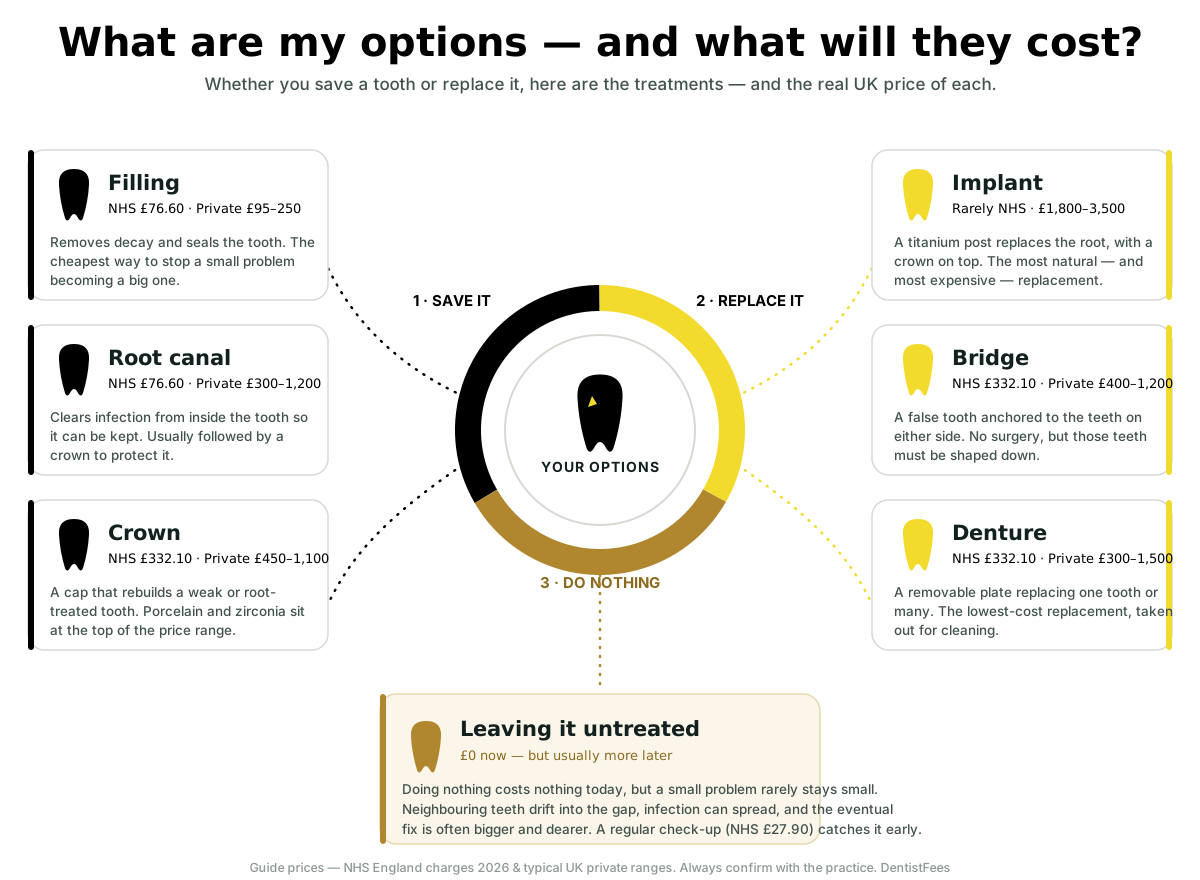
Keeping your natural tooth is nearly always the cheapest route. A filling (NHS £76.60) stops decay early. If infection has reached the centre of the tooth, a root canal (£300–£1,200 privately) clears it so the tooth can be kept — usually finished with a crown (NHS £332.10) to protect it. See how this compares to replacement →
If a tooth can't be saved, three options fill the gap. An implant (£1,800–£3,500) is the most natural but the priciest. A bridge anchors a false tooth to its neighbours (NHS £332.10, or £400–£1,200 privately). A denture is the lowest-cost, removable option (from £300). Private fees for the same option vary widely between practices — compare dentists near you →.
It's a real option — and sometimes the right one for a minor, symptom-free issue — but it's rarely free in the long run. Gaps let neighbouring teeth drift, infection can spread, and the eventual fix tends to be bigger and dearer. The cheapest insurance is a regular check-up (NHS £27.90) so problems are caught while they're still small.
Is it cheaper to save a tooth or replace it?
Almost always cheaper to save it. A filling (NHS £76.60) or root canal plus crown keeps your own tooth, while replacing a lost tooth with an implant costs £1,800–£3,500 privately. That is why acting early — before a tooth needs removing — is the biggest money saver in dentistry.
Should I have a root canal or an extraction?
A root canal keeps your natural tooth and usually costs less than replacing it afterwards. Extraction is cheaper up front but leaves a gap you may want to fill later with an implant, bridge or denture — which costs more overall. Your dentist will advise based on how much healthy tooth remains.
What are my options to replace a missing tooth?
Three main options: a dental implant (£1,800–£3,500, most natural), a bridge (NHS £332.10 or £400–£1,200 privately, anchored to neighbouring teeth), or a denture (from £300, removable and lowest cost). Each has trade-offs in price, longevity and comfort.
What happens if I do nothing?
Doing nothing costs nothing today, but problems rarely stay small. Neighbouring teeth can drift into the gap, decay or infection can spread, and the eventual treatment is usually bigger and more expensive. A regular NHS check-up (£27.90) is the cheapest way to catch problems early.
Guide prices: NHS England charges 2026 and typical UK private fee ranges. General information, not clinical advice — always confirm treatment and cost with your dentist.